If you’re planning a glass installation in Los Angeles — whether it’s new windows, a storefront, shower doors, or a glass table top — there’s something you need to understand before anyone picks up a measuring tape: building codes. After 17+ years installing glass across LA County, I’ve seen too many homeowners and business owners learn this the hard way. A contractor cuts corners on code compliance, and suddenly you’re facing a failed inspection, a voided insurance claim, or worse — glass that’s actually dangerous.
Why Building Codes Matter for Glass
Building codes aren’t bureaucratic red tape. They’re minimum safety standards developed from decades of real-world failures. In earthquake country — and yes, all of Los Angeles is earthquake country — glass that isn’t properly specified and installed becomes a lethal hazard when the ground shakes. California’s codes account for this. So does Title 24, our state’s energy efficiency standard that affects every window and glass door installed in California.
As a 3rd generation glass glazier and Air Force veteran, I approach code compliance the same way I approached mission planning: know the requirements, meet them precisely, and leave nothing to chance.
Key Building Codes That Affect Glass Installation
California Building Code Section 2406 — Safety Glazing
This is the big one. CBC 2406 identifies “hazardous locations” where safety glass is mandatory. If your glass falls in any of these categories, it MUST be tempered or laminated safety glass — no exceptions.
Hazardous locations include:
- Glass in doors (any glass in a door, period)
- Glass within 24 inches of a door’s vertical edge
- Glass within 60 inches of a floor or walking surface (for certain conditions)
- Glass in shower and bathtub enclosures
- Glass near stairways, ramps, and landings
- Glass in walls enclosing hot tubs, saunas, and steam rooms
- Glass with a bottom edge less than 18 inches from the floor (for certain sizes)
If your window glass replacement involves any of these locations, tempered glass is not optional — it’s the law.
Tempered vs Laminated — Both Are Safety Glass, But Different
Both tempered and laminated glass satisfy CBC 2406 safety glazing requirements, but they serve different purposes:
Tempered glass is heat-treated to be 4-5 times stronger than regular annealed glass. When it breaks, it shatters into thousands of small, relatively dull pieces rather than dangerous shards. This is what you’ll find in most residential windows, shower doors, and patio doors.
Laminated glass sandwiches a plastic interlayer between two glass panes. On impact, the glass cracks but stays in place — it doesn’t fall out of the frame. For commercial storefront glass, laminated glass provides security against break-ins even after the initial impact. It’s also increasingly popular for residential use in street-facing windows for noise reduction and security.
Title 24 — California Energy Code
Title 24 is California’s energy efficiency mandate, and it directly affects your window and glass door choices. The code sets maximum U-factor (heat transfer) and Solar Heat Gain Coefficient (SHGC) values for different climate zones.
Los Angeles County spans Climate Zones 6 through 9, with most of the LA Basin in Zone 6. For replacement windows in Zone 6, Title 24 currently requires:
- Maximum U-factor: 0.32
- Maximum SHGC: 0.25
What this means in practice: if you’re replacing windows in Los Angeles, you need double pane Low-E glass at minimum. Single pane clear glass won’t meet the energy code. At LA Glass Company, we stock energy-efficient glass that exceeds Title 24 requirements, helping you save on cooling costs while staying code-compliant.
California Building Code Section 2407 — Glass in Handrails and Guards
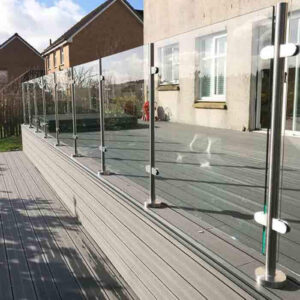
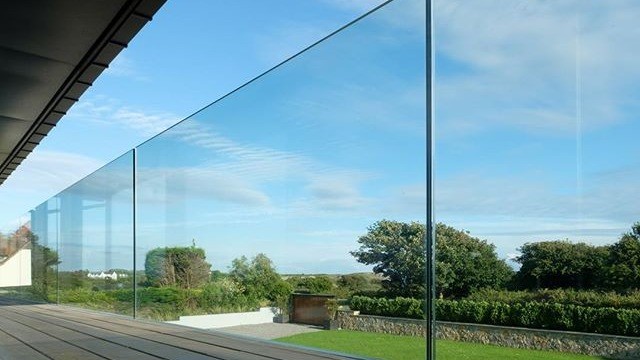
If you’re planning a glass railing for a balcony, staircase, or deck, CBC 2407 applies. Glass used as a guard must be laminated tempered glass (or fully tempered glass in certain configurations), and it must withstand specific structural loads. This is not a DIY project — engineered systems with specific glass thickness and mounting hardware are required.
Los Angeles Municipal Code — Local Amendments
Los Angeles has its own amendments to the state building code. The LAMC may impose additional requirements for:
- Historic districts (some have restrictions on visible glass types)
- Coastal zones (additional wind load requirements)
- Fire zones (specific fire-rated glazing may be required)
For commercial properties in LA, the fire department may also have requirements for storefront glass in certain occupancies.
Permits: When Do You Need One?
This is the question I get most often. Here’s the practical answer:
You generally DON’T need a permit for:
- Replacing broken glass in an existing frame (like-for-like replacement)
- Replacing a failed IGU (insulated glass unit) in the same frame
- Installing a new shower door enclosure (it’s a fixture, not structural)
- Replacing glass table tops or mirror glass
You generally DO need a permit for:
- Enlarging a window opening (cutting into the wall)
- Adding a new window where one didn’t exist
- Converting a window to a door
- Installing structural glass (glass railings, glass floors, glass walls that are part of the building envelope)
- Commercial storefronts that change the opening size or structural configuration
When in doubt, we can advise during the site assessment. For permitted work, LA Glass Company coordinates with your contractor or handles the permit process directly for commercial projects.
Commercial Glass: Additional Code Considerations
Commercial properties face additional requirements beyond residential:
ADA Compliance: The Americans with Disabilities Act requires specific glass markings, door opening forces, and threshold heights. Glass doors must have markings at specific heights so visually impaired individuals can detect them.
Fire-Rated Glazing: Certain commercial occupancies and fire separation walls require fire-rated glass. This is specialized glass that maintains its integrity for a specified time (20, 45, 60, or 90 minutes) during a fire. It cannot be substituted with standard tempered or laminated glass.
Impact Resistance: In some Los Angeles commercial zones, ground-floor glass must meet impact-resistance standards for security. Laminated security glass with thick interlayers can meet these requirements.
How LA Glass Company Ensures Code Compliance
Code compliance starts before we order the glass. Here’s our process:
- Site Assessment: During the initial visit, we identify the specific code requirements for your project based on glass location, building type, and jurisdiction.
- Glass Specification: We specify the exact glass type, thickness, and treatment required by code — tempered where mandated, Low-E where Title 24 requires it, laminated where security is a concern.
- Documentation: For commercial projects, we provide product data sheets and compliance documentation for your records and inspections.
- Installation: Our installers are trained on code-compliant installation methods, from proper setting blocks and weep holes to correct sealant specification.
- Final Check: Every installation undergoes a quality inspection against our checklist, which includes code compliance verification.
Common Code Violations We See
In 17+ years, I’ve been called to fix a lot of other contractors’ work. Here are the most common code violations:
Annealed (non-safety) glass in door sidelites — This is dangerous and illegal. All glass within 24 inches of a door edge must be tempered or laminated.
Single pane glass in replacement windows — Fails Title 24 energy requirements. Must be double pane Low-E.
No glass markings — Safety glass must carry a permanent mark indicating the manufacturer, safety standard, and glass type. If the mark is missing, the inspector can’t verify compliance.
Wrong glass in shower enclosures — Shower glass must be tempered. Period. I’ve found non-tempered glass in showers, which is an accident waiting to happen.
Improper commercial door glass — Storefront doors require specific glass types and markings. Generic tempered glass may not satisfy all requirements.
The Bottom Line
Building codes exist for your safety and your property’s long-term performance. At LA Glass Company, we don’t cut corners on compliance because we understand what’s at stake — your family’s safety, your business’s security, and your investment in your property.
If you’re planning any glass work in Los Angeles, call us at 323-366-4202 for a free assessment. We’ll help you understand exactly what codes apply to your project and ensure every piece of glass we install meets or exceeds those standards.
That’s the methodical approach three generations of my family have always brought to glass. That’s the servant’s attitude we bring to every customer.
REQUEST QUOTE NOW! — Call 323-366-4202 or visit thelaglass.com.
Gustavo Ramos is a 3rd generation glass glazier, US Air Force veteran, and owner of LA Glass Company. Since 2008, he has led thousands of glass installations across Los Angeles, Orange County, and the San Fernando Valley.