A broken storefront window doesn’t just look bad. It halts business, exposes your inventory, creates a security liability, and — if it’s not handled correctly — costs more than it should and takes longer than it needs to. For Los Angeles business owners, understanding how commercial glass replacement works can mean the difference between a same-day fix and a week of plywood over your entrance.
LA Glass Company, founded in 2008 by third-generation glazier and Air Force veteran Gus Ramos, provides commercial glass replacement across Los Angeles, Orange County, and the San Fernando Valley. Here’s what every business owner should know before a broken pane forces the conversation.
The Difference Between Commercial and Residential Glass
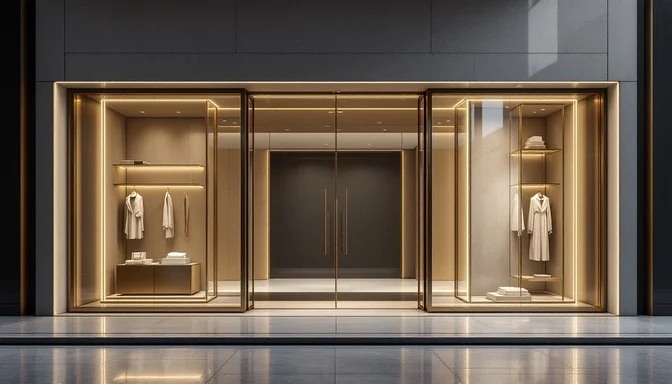
This is the first thing most business owners don’t realize: the glass in a storefront is not the same as the glass in a house. Commercial glass is governed by the International Building Code (IBC), which imposes more stringent requirements than the residential code for glass strength, safety glazing, wind load resistance, and impact performance.
Thickness: Commercial storefront glass is typically 1/4-inch thick minimum, with 3/8-inch or 1/2-inch specified for larger openings, high-traffic entrances, or security-sensitive applications. That’s two to four times the thickness of standard residential window glass.
Tempering: Almost all commercial glass is tempered. The tempering process heat-treats the glass to increase its strength four to five times, and ensures that if breakage occurs, the glass shatters into small, relatively harmless fragments rather than dangerous shards. California Building Code requires safety glazing — tempered or laminated — in all commercial entrances, sidelights, and anywhere the glass is within 24 inches of a door.
**Laminated glass:** For storefronts where security is a concern — and in Los Angeles, that’s most retail locations — laminated glass provides an additional layer of protection. Laminated glass consists of two or more layers of glass bonded with a polyvinyl butyral (PVB) interlayer. When broken, the glass adheres to the interlayer, maintaining a barrier that significantly delays forced entry. Many insurance carriers offer premium reductions for businesses that install laminated storefront glass.
**Low-E coatings:** Commercial buildings in California are subject to Title 24 energy code requirements that often mandate Low-E glass for exterior glazing. Low-E coatings reduce solar heat gain while transmitting visible light — a critical performance characteristic in Southern California, where air conditioning costs represent a significant operating expense for commercial properties.
The Storefront Glass Replacement Process
When a business calls LA Glass Company with broken storefront glass, here’s what happens — typically within hours, not days.
**Immediate Response and Security:** The first priority is securing the opening. We dispatch a crew to board up the damaged area with plywood or, depending on the situation, install temporary glass. A business can’t operate with an open storefront — it’s a security risk, a liability, and in many cases, a violation of the lease. Our 24/7 emergency glass service ensures that no LA business waits until morning for a secure opening.
**Assessment and Measurement:** Once the opening is secured, we measure for the replacement glass. This is more technical than it sounds. Storefront systems use extruded aluminum framing with specific glazing pocket dimensions. The replacement glass must match the system’s requirements for thickness, bite (how far the glass extends into the frame), and edge clearance. Too thick and it won’t fit. Too thin and it rattles or fails. We measure to 1/16-inch precision.
**Glass Type Determination:** Based on the existing installation, code requirements, and the business’s needs, we determine the appropriate glass specification. Is the existing glass tempered? If not, the replacement must be — code requires it. Is laminated glass warranted for security? Would a Low-E coating reduce HVAC costs and improve occupant comfort? Does the glass need to match the tint or reflectivity of adjacent panels?
**Fabrication:** Commercial glass is custom-fabricated to the exact dimensions and specifications of the opening. Standard float glass can be cut to size relatively quickly. Tempered glass requires fabrication before tempering, which typically adds 24 to 48 hours to the lead time. Laminated glass adds additional processing time. We communicate realistic timelines up front and explore temporary solutions when the permanent glass will take several days.
**Installation:** The installation is performed by our employee glaziers — not subcontractors, not day laborers. The old glass and any broken fragments are removed and properly disposed of. The framing is inspected and any damaged gaskets, setting blocks, or weatherstripping are replaced. The new glass is set into the glazing pocket, secured, and sealed. The area is cleaned, and the installation is inspected before we leave.
Storefront Framing: When the Glass Isn’t the Only Problem
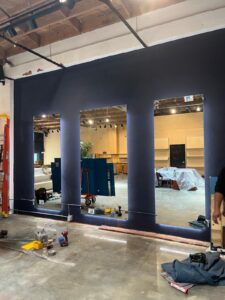
Sometimes a broken storefront window reveals a larger issue: the aluminum framing itself is damaged, corroded, or out of specification. In coastal areas of Los Angeles and Orange County, salt air accelerates aluminum oxidation. A frame that’s been in place for 20 years may have corroded glazing pockets, seized fasteners, or lost its structural integrity.
In these cases, replacing the glass alone is a temporary fix. The right solution is replacing the glass and the affected framing components — or, in severe cases, the entire storefront system. LA Glass Company provides full storefront replacement services, including demolition of the existing system, fabrication and installation of new aluminum framing, and glazing with code-compliant glass.
Office Glass: Interior Partitions and Conference Rooms
Commercial glass isn’t just about the exterior. Inside office buildings, glass partitions, conference room walls, and interior windows are subject to their own set of requirements.
**Frameless interior glass walls** use tempered glass panels, typically 3/8-inch or 1/2-inch thick, with minimal hardware. These systems create private offices and meeting rooms that maintain the open, light-filled aesthetic that modern tenants demand.
**Butt-glazed walls** — where glass panels abut edge-to-edge with only a thin silicone joint — require precise fabrication and expert installation. The panels must be perfectly square and the joints must be uniform. There’s no margin for error.
**Fire-rated glass** is required in specific locations within commercial buildings — stairwell enclosures, corridor walls, and areas where the building code mandates a fire-resistance rating. Fire-rated glass looks like ordinary glass but contains intumescent interlayers that expand when exposed to heat, creating an insulating barrier that maintains the wall’s fire rating. This is a specialized product that requires specialized knowledge to specify and install correctly.
What Commercial Glass Replacement Costs — and Why
Commercial glass replacement costs vary widely based on glass type, size, accessibility, and urgency. A straightforward tempered glass storefront panel replacement might run several hundred to a few thousand dollars. A large laminated Low-E panel with custom fabrication and after-hours installation costs significantly more.
The variables that drive cost include:
- **Glass type:** Annealed < tempered < laminated < laminated+Low-E < fire-rated
- **Size:** Glass cost increases more than linearly with size because larger panels require thicker glass and specialized handling equipment
- **Accessibility:** Ground-floor storefronts are straightforward. Upper-floor windows requiring lifts or scaffolding add cost
- **Urgency:** Emergency after-hours or weekend service involves premium labor rates
- **Framing condition:** If the framing needs repair or replacement, that’s additional scope
- **Permitting:** Some commercial glass replacement projects require building permits, particularly if the work involves structural modifications or changes to the building envelope
At LA Glass Company, we provide transparent, itemized quotes before any work begins. There are no surprise charges, no bait-and-switch pricing, and no pressure to replace framing or upgrade glass unless it’s genuinely necessary. Gus Ramos built this business on a servant’s attitude — and that means honest pricing and honest recommendations.
Emergency Commercial Glass: What to Do When It Breaks
When commercial glass breaks — whether from a break-in, a vehicle impact, a storm, or an accident — the steps you take in the first hour make a significant difference in the outcome.
**Step 1: Secure the area.** Keep employees and customers away from broken glass. If the break occurred during business hours, close off the affected area and redirect foot traffic.
**Step 2: Document the damage.** Take photographs from multiple angles before anything is moved or cleaned up. These photographs are essential for insurance claims and police reports.
**Step 3: Call LA Glass Company at 323-366-4202 (LA), 714-831-3190 (OC), or 747-285-7941 (SFV).** Our emergency response team is available 24/7. We’ll arrive, secure the opening, assess the damage, and begin the replacement process.
**Step 4: Contact your insurance carrier.** Report the incident and open a claim. We provide the documentation your adjuster needs — photographs, measurements, glass specifications, and a detailed estimate.
**Step 5: Install permanent replacement.** Once the replacement glass is fabricated, we schedule installation at a time that minimizes disruption to your business — early morning, after hours, or weekends if necessary.
Choosing a Commercial Glass Contractor: Questions to Ask
Not every glazing contractor is qualified for commercial work. Before hiring, ask:
- Are you licensed and insured for commercial work in California? Verify the contractor’s license on the CSLB website. LA Glass Company holds California Contractor License #______.
- Do you have experience with my specific storefront or curtain wall system? Commercial glazing systems from manufacturers like Kawneer, Oldcastle, and Tubelite have specific installation requirements. A contractor familiar with your system will deliver better results, faster.
- **Do you provide 24/7 emergency response?** Glass doesn’t break on a 9-to-5 schedule. Your contractor should be reachable when you need them.
- **What’s your warranty on commercial glass and installation?** Material warranties come from the glass manufacturer and typically cover defects for one to ten years. Workmanship warranties come from the contractor. Get both in writing.
- **Do you handle permitting if required?** Some commercial glass replacement projects trigger permit requirements. Your contractor should manage this process or clearly explain when a permit is needed.
The LA Glass Company Difference for LA Businesses
Gus Ramos founded LA Glass Company in 2008 to provide Southern California businesses and homeowners with glass services backed by three generations of glazing expertise and a veteran’s commitment to doing things right. Our commercial glass division serves businesses of every size — from single-location retail stores to multi-tenant office buildings to restaurant groups with locations across Los Angeles, Orange County, and the San Fernando Valley.
We understand that for a business, a broken window is more than an inconvenience. It impacts revenue, security, and your customers’ perception of your business. We respond quickly, communicate clearly, and complete the work correctly — because that’s what our reputation demands and what our clients deserve.
REQUEST QUOTE NOW! Call LA: 323-366-4202 | OC: 714-831-3190 | SFV: 747-285-7941.